TDH Slurry
PNEUMATIC ACTUATED PINCH VALVE- PAVL
PNEUMATIC ACTUATED PINCH VALVE- PAVL
The PAVL Pneumatic Actuated Pinch Valve is designed for precise shutoff and flow-control applications involving abrasive, corrosive, or difficult-to-handle materials. It is well suited for slurries, powders, granular products, and other process media that can quickly wear or clog conventional valves.
The valve is operated by a pneumatic actuator and equipped with a pneumatic positioner for controlled valve movement. The standard positioner accepts a 0.2–1.0 bar control signal. In the standard configuration, an increasing signal moves the valve toward the closed position.
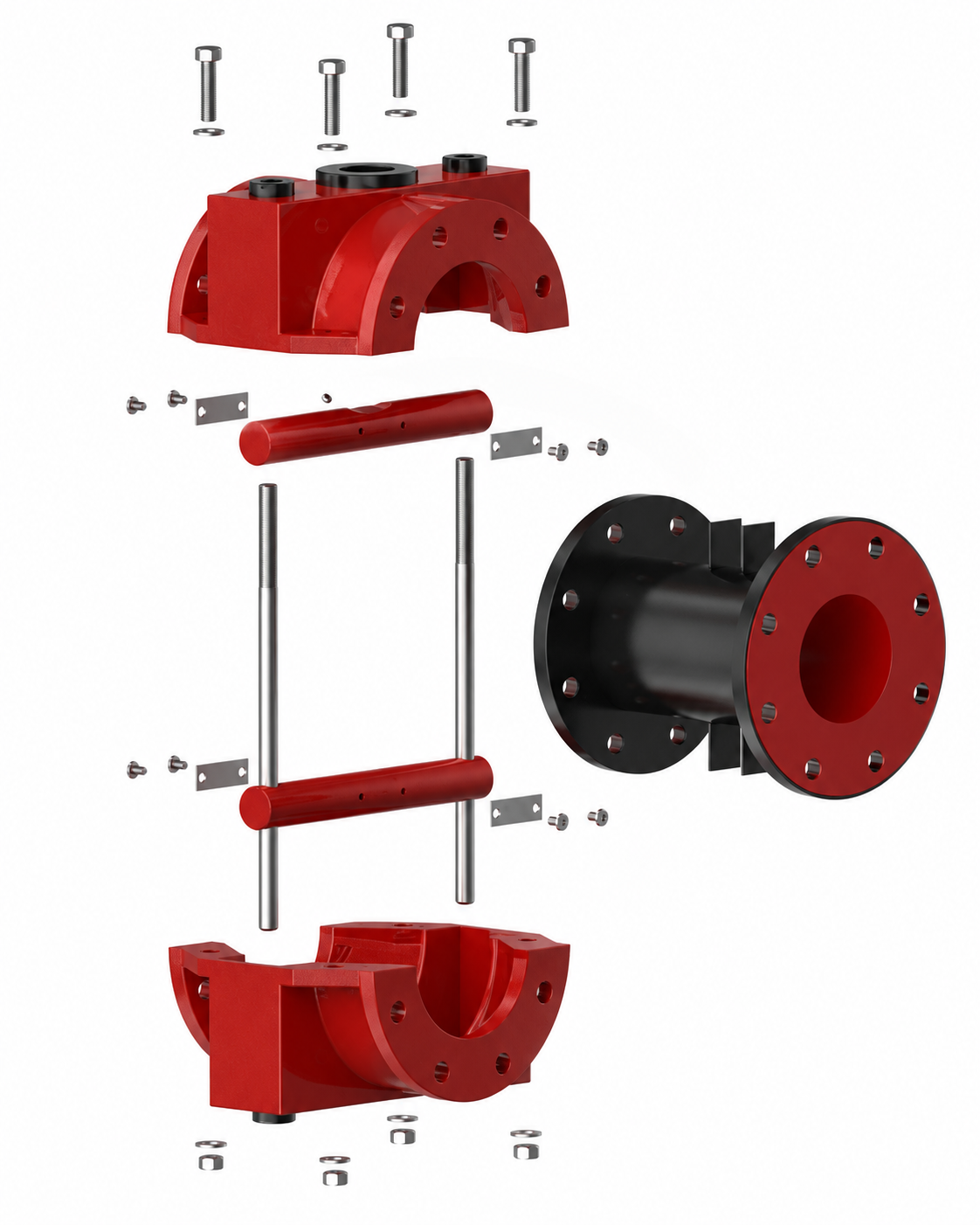
At the center of the PAVL design is a replaceable elastomer sleeve. The sleeve is the only valve component normally exposed to the process medium, protecting the metal body and reducing the number of parts subject to wear.
Key Features
- Full-bore flow path minimizes pressure loss and flow restrictions.
- Accurate pneumatic positioning supports controlled opening, throttling, and shutoff.
- Centerline closure provides even sleeve compression and helps extend sleeve life.
- Self-cleaning operation reduces material buildup and clogging.
- Replaceable sleeve design simplifies maintenance and lowers long-term ownership costs.
- Heavy-duty metal body provides structural strength in demanding industrial environments.
- Minimal process-contact components help protect the actuator and valve body from abrasive or corrosive media.
- Multiple sleeve materials and configurations are available to match specific operating conditions.
Sleeve Options
Sleeves can be selected or customized according to the process medium, pressure, temperature, abrasion level, and vacuum requirements.
Available configurations include:
- Standard
- Extra-thick
- High-pressure
- Conical
- Vacuum-resistant
Service and Maintenance
Because the elastomer sleeve is the primary wear component, routine maintenance is straightforward. Once the sleeve reaches the end of its service life, it can be replaced without replacing the complete valve assembly. This restores the valve’s sealing and operating performance while helping reduce downtime and maintenance costs.
Share